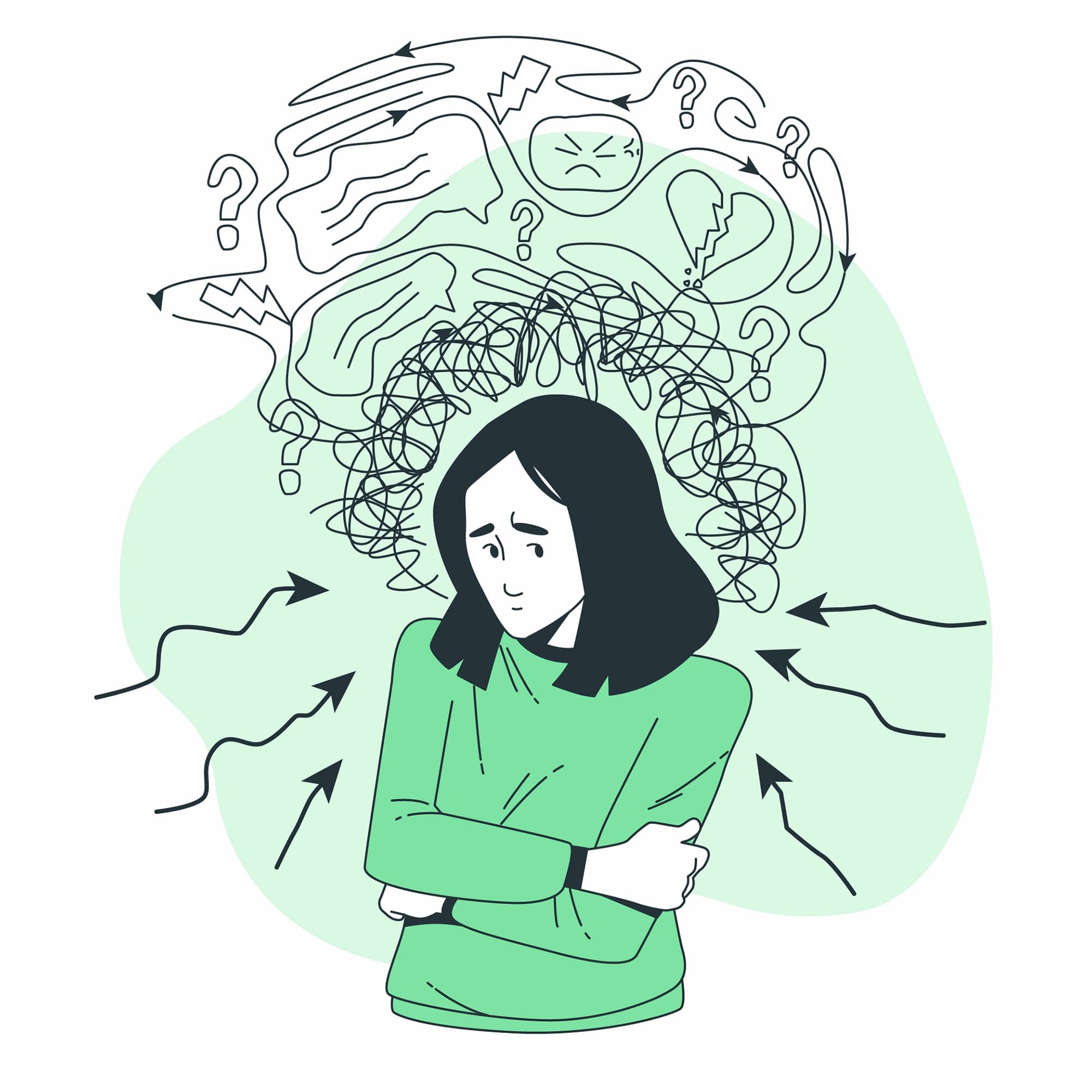
Anxiety
Anxiety is a natural stress response, but when it becomes persistent and overwhelming, it can disrupt daily life. Learn about the symptoms, types of anxiety disorders, and evidence-based treatments such as Cognitive Behavioral Therapy (CBT).
What Is Anxiety?
Anxiety is a natural, even protective, response to stress or perceived threat — the body's "fight or flight" reaction, driven by hormones such as cortisol and adrenaline. Some anxiety before an interview or exam is normal and can even improve performance. The problem begins when this sense of unease becomes disproportionate to the actual danger, persistent, pervasive, and disabling.
Symptoms of Anxiety
Anxiety shows up in both the body and the mind. Physical symptoms include a racing heart, shortness of breath, sweating, muscle tension, headaches, and digestive issues. Psychologically, a person may experience restlessness, difficulty concentrating, constant worry, sleep disturbances, and avoidance of situations perceived as threatening.
Types of Anxiety Disorders
Anxiety spans a wide spectrum: generalized anxiety disorder (chronic, free-floating worry about various areas of life), social anxiety disorder (intense fear of being judged in social situations), panic disorder, specific phobias, and performance-related anxiety at work or school are among the most common.
A Psychological Perspective
In Cognitive Behavioral Therapy (CBT), anxiety is often understood as the result of selective attention to threatening cues, catastrophic interpretations of situations, and irrational beliefs about danger. By identifying and challenging these automatic negative thoughts, a person can gradually reduce their anxiety response. In Acceptance and Commitment Therapy (ACT), rather than trying to eliminate anxiety entirely — which often backfires and intensifies it — the focus shifts to learning to sit with uncomfortable feelings without letting them dictate life decisions.
When to Seek Professional Help
If your anxiety has persisted for more than a few weeks, is interfering with your work, studies, or relationships, or is accompanied by panic attacks, extensive avoidance, or intrusive thoughts, it may be time to see a clinical psychologist. Research consistently shows that behavioral treatment — alone or combined with psychiatric medication when needed — is highly effective for anxiety disorders, and CBT remains a first-line treatment for many types of anxiety in both children and adults.
If you're navigating "Anxiety" and would like professional support, you can book a consultation session.
Book a Consultation